How to Build Explosive Speed and Agility for Basketball
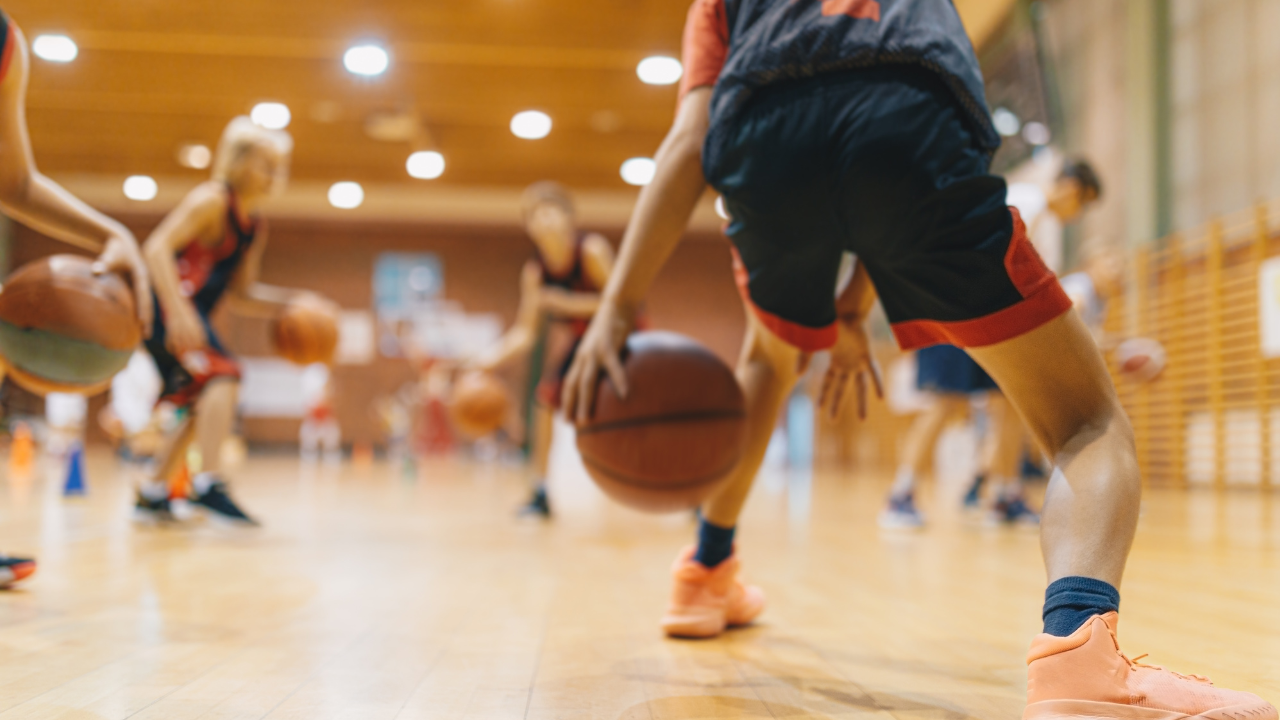
(Why Most “Speed Training” Doesn’t Transfer to the Game)
Most basketball players think speed training means running faster in a straight line.
That’s the first mistake.
Basketball speed isn’t about top speed. It’s about how quickly the body can brake, redirect, and re-accelerate while staying balanced and aware. The fastest players in games aren’t the best sprinters — they’re the best deciders under movement.
This article breaks down how explosive speed actually works on the court, why traditional conditioning often fails, and how players can train speed at home in a way that shows up on game film.
What “Game Speed” Really Is
Watch elite guards closely. Their advantage isn’t raw pace — it’s timing.
They:
-
Change speed without warning
-
Shift gears mid-dribble
-
Decelerate faster than defenders expect
-
Re-accelerate out of awkward angles
This happens because basketball speed has three layers:
-
Start Speed – how fast the first two steps are
-
Stop Speed – how efficiently the body can decelerate
-
Re-Acceleration – how quickly force is re-applied after stopping
Most training programs focus on #1 and ignore #2 and #3. That’s why players look fast in drills but average in games.
The Hidden Skill: Deceleration
Deceleration is the most undertrained skill in basketball — and the biggest separator.
If a player can’t stop efficiently:
-
Cuts get wide
-
First steps get delayed
-
Knees and ankles absorb unnecessary stress
-
Changes of direction feel slow, even with strong legs
High-level agility starts with eccentric strength — the ability to absorb force under control.
Simple truth: You can’t be explosively fast if you can’t slow down on purpose.
How to Train Deceleration (At Home)
No cones. No ladders. No fancy setup.
Focus on:
-
Short sprint → controlled stop in 2 steps
-
Lateral shuffle → hard plant → stick the landing
-
Forward hop → absorb quietly → balance check
The goal isn’t speed at first. It’s control. Speed comes after.
Why Ladder Drills Rarely Transfer
Agility ladders look impressive. They also rarely show up in games.
Why?
Because ladders train:
-
Pre-planned foot patterns
-
No decision-making
-
No reaction component
Basketball agility is reactive. It responds to:
-
Defender movement
-
Ball position
-
Timing windows
A better approach is constraint-based agility — drills where the body must react instead of memorize.
This is where simple reactive tools (like visual or audio cues) can be useful, but even without equipment, reaction can be trained by:
-
Randomized start directions
-
Unpredictable stop signals
-
Alternating speeds within the same rep
The nervous system must stay engaged.
Acceleration Isn’t About Power — It’s About Angles
Many players lift heavy and still struggle with first-step burst.
That’s usually not a strength issue. It’s a force-direction issue.
Elite accelerators:
-
Maintain a forward shin angle
-
Push back into the floor, not straight down
-
Keep the torso aligned with the drive leg
At home, players can train this with:
-
Wall-drives
-
Low-angle marching accelerations
-
Short resisted pushes (even with towels or bands)
The goal is teaching the body where to apply force — not just to produce more of it.
The Role of Plyometrics (And Why Most People Rush Them)
Jump training helps speed — but only after a base of control exists.
Reactive plyometrics work best when:
-
Landing mechanics are clean
-
Ankles and knees track properly
-
The athlete can absorb force quietly
Otherwise, plyos become noise — lots of effort, little transfer.
A simple progression:
-
Landing control drills
-
Low-amplitude hops
-
Directional bounds
-
Reactive jumps
Rushing to step 4 is why many players stall or get hurt.
Putting It Together: What Actually Works
Explosive speed isn’t built in isolation. It’s layered.
The players who feel “fast” on the court usually train:
-
Deceleration before acceleration
-
Reaction before repetition
-
Directional force before raw power
They don’t just move fast — they move on purpose.
Takeaway / Next Step
True basketball speed shows up when training respects how the game actually moves. Players who want an edge should stop chasing conditioning and start training control, angles, and reaction.
Up next, a sample at-home agility session will break this into a clear, repeatable structure.
Listings related to How to Build Explosive Speed and Agility for Basketball

Transforming Basketball
Transforming Basketball – An Evidence-Based Approach to Player & Team Development

HoopsKing
HoopsKing – Comprehensive Basketball Training Equipment

EDGE® Shoe Grip System
EDGE® Shoe Grip System – An Honest Review for Basketball Players

Vert Shock
Vert Shock – Jump Training Program for Basketball Players